Land Rover Discovery
The Land Rover Discovery: What to buy and what to look out for!
5 October 2024 · 14 min
- SUV
- 4x4

Or listen onApple PodcastsSpotify
Key facts
- Cars for sale
- 2,168
- Average asking price
- £27,453
- Typical price range
- £8,430 to £56,019
- The middle 90% of adverts
- Cheapest advert
- £2,695
- 2008 2.7 Td V6 HSE 5dr Auto · 210,000 miles
- Most expensive advert
- £89,500
- 2026 Discovery Diesel SW 3.0 D350 Tempest 5dr Auto · 6,746 miles
- Typical mileage
- 69,329 miles
- Days advertised
- 89
- Typical time on sale
- Insurance groups
- 17 to 48
- Fuel
- Gearbox
Source: MarketCheck UK. Figures for used cars advertised in the UK on 24 November 2026.
Used prices by year
| Year | Cars for sale | Typical price | Price range | Typical mileage |
|---|---|---|---|---|
| 2026 | 100 | £61,725 | £50,990 to £76,952 | 5,200 miles |
| 2025 | 148 | £49,990 | £45,346 to £59,979 | 15,473 miles |
| 2024 | 114 | £46,870 | £38,990 to £54,103 | 22,386 miles |
| 2023 | 193 | £39,850 | £30,298 to £46,997 | 40,047 miles |
| 2022 | 120 | £35,990 | £24,995 to £44,428 | 47,539 miles |
| 2021 | 151 | £30,490 | £21,950 to £38,497 | 63,000 miles |
| 2020 | 127 | £23,990 | £15,996 to £32,422 | 74,754 miles |
| 2019 | 221 | £22,990 | £15,000 to £30,000 | 71,846 miles |
| 2018 | 201 | £19,484 | £13,995 to £26,499 | 79,000 miles |
| 2017 | 261 | £17,900 | £13,795 to £23,995 | 80,000 miles |
| 2016 | 131 | £17,290 | £9,995 to £25,495 | 97,000 miles |
| 2015 | 93 | £15,390 | £9,991 to £23,197 | 98,500 miles |
| 2014 | 96 | £13,990 | £8,991 to £19,248 | 106,278 miles |
| 2013 | 49 | £10,000 | £6,474 to £19,590 | 112,452 miles |
| 2012 | 43 | £9,500 | £6,754 to £15,994 | 108,862 miles |
| 2011 | 33 | £7,995 | £5,894 to £15,028 | 119,352 miles |
| 2010 | 23 | £7,999 | £3,530 to £11,900 | 119,944 miles |
| 2009 | 14 | £5,992 | £4,201 to £10,396 | 128,000 miles |
| 2008 | 6 | £5,740 | £3,020 to £6,995 | 125,320 miles |
| 2007 | 7 | £4,499 | £3,145 to £7,135 | 130,500 miles |
| 2005 | 5 | £5,999 | £3,599 to £9,290 | 90,000 miles |
| 2004 | 5 | £7,995 | £5,655 to £16,990 | 131,500 miles |
| 2003 | 5 | £6,990 | £5,495 to £19,590 | 112,000 miles |
| 2002 | 5 | £7,995 | £4,600 to £13,594 | 96,900 miles |
| 2001 | 7 | £7,995 | £4,149 to £17,594 | 121,000 miles |
About this episode
What if the rugged, off-road beast you know as the Land Rover Discovery could also be a tech-savvy, eco-friendly marvel? Get ready to explore the captivating journey of this iconic vehicle, from its robust debut in 1989 to its sophisticated fifth generation. We'll guide you through its evolution, spotlighting key innovations like the Series I's no-nonsense design, the Series II's air suspension, the Terrain Response system in Discovery 3, and the Discovery 5's sleek all-aluminum body. Each phase represents a fusion of rugged capability and increasing luxury, showing how the Discovery has remained a leader in both realms.
In this episode, we also gaze into the crystal ball to envision the future of the Discovery, as it gears up for a new era of electrification and smart technology. The promise of hybrid models and potential autonomous capabilities are not just trends for Land Rover; they are enhancements that could redefine driving adventures. Imagine controlling your Discovery via smartphone and sharing real-time experiences, all while staying true to its core adventurous spirit. The Discovery's ongoing journey is not just about keeping pace with the times but setting new standards, making it a vehicle that continues to captivate and inspire.
Transcript
Machine-generated transcript. It may contain errors.
- 0:38
All right, everyone, buckle up. Today's deep dive is going to get us a little muddy as we take on the Land Rover Discovery. It's always been more than just an SUV, wouldn't you say? Absolutely. From what I've seen, it's not afraid to get a little dirt under its fingernails. It's about striking that balanced luxury that can handle the backroads.
- 0:55
Speaking of backroads, when did this rugged luxury icon first hit the scene? Picture it. 1989, the Range Rover was already making waves, but. But it came with a hefty price tag. Exactly. The discovery was born out of that need for something a bit more attainable, but didn't skimp on capability. So, a rugged SUV with a touch of class sounds like a winning combination.
- 1:19
And it's clearly stood the test of time. Five generations is no small feat. It's all about evolving with the times without losing sight of what makes it a discovery. Speaking of evolutions, wasn't there a big change with the fifth generation. Something about aluminum. Ah, yes. In 2017, they introduced an all-aluminum body. Now, I'll be honest, car construction isn't my forte.
- 1:40
What's the significance there? Think of it as a massive weight loss program. Aluminum is much lighter than traditional steel. So, better fuel efficiency. Exactly. They managed to make it lighter without sacrificing its ruggedness. Smart engineering. Okay, I'm hooked. Five generations, though. That's a lot to unpack. Yeah. Where do we even begin? Well, to truly appreciate where it is now, we need to understand its roots.
- 2:04
Let's rewind then. Back to the beginning with the series I. What made that first generation so special? The series, I was all about that classic boxy design, no-nonsense. Like the strong silent type. Exactly. It was a workhorse built for those who dared to venture off the beaten path. Rugged and reliable. Gotta love that. But let's be honest.
- 2:24
Were there any creature comforts in those early models? Well, let's just say comfort was a relative term back then. The focus was on durability, not so much a cushy ride. I can see the appeal in that, though. A true connection with the road bumps and all. That's the spirit. And they did start to embrace comfort a bit more with the Series 2.
- 2:43
Okay, tell me more. They kept that rugged DNA, but introduced air suspension in the Series 2, a game changer for ride comfort back then. Alright, now that's a feature I can get behind. Combining that off-road capability with a bit of luxury. What else did the Series 2 bring to the table? They also introduced active cornering enhancement, ACE for short.
- 3:05
ACE? You've piqued my interest. What exactly is that? Imagine taking those corners with confidence. The vehicle stays level even at higher speeds. No more tipping over feeling. You got it. ACE uses hydraulics to counteract body roll, making for a much smoother, more controlled experience, especially on those winding roads. I'm sold. But let's move on to the Discovery 3.
- 3:26
You mentioned earlier it was a game changer. What made it so special? The Discovery 3, produced from 2004 to 2009, really solidified the Discovery's reputation as a true off-road champ. This is where the legendary terrain response system comes in, right? You know it. It's like having an off-road expert riding shotgun. So, walk me through it. How does it work?
- 3:46
Let's say you're about to tackle a muddy trail. Instead of fiddling with settings, you simply turn the dial to mud. And the car just adapts. Exactly. Engine, traction control, even the ride height adjusts automatically, giving you the best possible grip and control. It's like magic. Yeah. But I'm guessing the Discovery 3 wasn't just about off-road dominance. What about everyday driving?
- 4:07
They upped their game on the comfort front, that's for sure. More space, more luxurious materials, a smoother overall ride. So it was becoming more than just a rugged off-roader, it was evolving. Absolutely. And that evolution continued with the Discovery 4. Which brings us to the period between 2009 and 2017. What did that generation bring to the party?
- 4:28
The Discovery 4. Think of it as a refinement of what already worked. It looked similar to the Discovery 3, but under the hood. That's where the real magic happened. Like what? Give me the details. More fuel-efficient engines, more power. A sleek new touchscreen infotainment system inside. It was a step into the future while honoring its roots. Technology moves so fast, it's amazing to see how it's impacted even a vehicle as rugged as the Discovery.
- 4:54
And that takes us to the current generation, the Discovery 5, the one that's turning heads on the roads right now. The Discovery 5 is sleek, modern, and packed with technology. A true blend of luxury and capability. But what makes it stand out? Well, for starters, the move to an all-aluminum body was a game changer. You know, you've mentioned that a couple of times, and I have to admit, I'm still not entirely clear on why that's so significant.
- 5:18
It's more than just about being lighter, although that's a huge part of it. Aluminum allows for those sculpted aerodynamic designs. So it looks good and improves fuel efficiency. Now you're getting it. And don't forget, being lighter makes it more nimble and responsive. It's like the Discovery got a whole new lease on life, both in terms of style and performance.
- 5:37
But let's shift gears for a moment and talk about the elephant in the room: the cost. What is a piece of this legacy can't be cheap? You're right, cars are a significant investment, and the discovery is no exception. So let's break it down. For those dreamers out there who want a taste of that classic discovery charm, what's a realistic budget for a used series one or two?
- 5:59
You might be surprised, you can find a well-maintained Series 1 or 2 for under £5,000. Really? That's less than I expected. Of course, a thorough inspection is a must with any older vehicle, but the potential for a steal is there. A classic car at an affordable price. Music to any enthusiast's ears. What about those who want something a little more modern?
- 6:20
Say a Discovery 3 or 4? You're looking at a price range between £8,000 to £25,000 for a Discovery 3 or 4. Still a range, but gives you an idea. And for those who want the latest and greatest, the Discovery 5. For the newest generation, be prepared to shell out at least £30,000 for a used model. Wow. And I'm guessing that can go up quite a bit depending on the specs.
- 6:41
Absolutely. For a nearly new or top of the line, you could be looking at upwards of 60,000 pounds. A discovery for every budget, though, which is great. But let's not forget the initial price tag is just the beginning. There's insurance, fuel costs, potential maintenance. You're absolutely right. Owning a car, especially one as capable as the discovery, comes with ongoing costs.
- 7:03
So let's talk about those. Insurance, for example, that can be a big one. Where do the different generations fall in that spectrum? The series run and two, being the oldest, tend to have lower insurance premiums, usually falling into groups 24 to 33. Makes sense. They're less complex mechanically and probably less attractive to thieves. What about the later models?
- 7:22
As you might expect, with their advanced tech and higher repair costs, the newer models mean higher premiums. Give me the specifics. The Discovery 3 typically sits in groups 34 to 40. The Discovery 4, with all its bells and whistles, bumps that up to groups 35 to 43. And the Discovery 5, I dread to ask. Let's just say it comes with a price.
- 7:43
Insurance-wise, we're talking groups 41 to 47. Definitely something to factor into your budget if you're considering the newest model. So, insurance is a key consideration. What about fuel efficiency? That's a big one for a lot of people these days. It's definitely a concern for many car buyers today, and it's interesting to see how fuel efficiency has evolved across the discovery generations.
- 8:05
Let's be honest, those early models weren't exactly known for their fuel economy, were they? Not exactly. The Series I and II, they had other priorities. You're looking at an average of 20 to 25 miles per gallon, which these days. A bit thirsty for the modern driver? You'd say that. But how do the later models compare? Things start looking up with the Discovery 3 and 4, especially the diesel engines, they'll give you around 25 to 30 miles per gallon.
- 8:29
That's better. And the Discovery 5. Tell me they've embraced the need for fuel efficiency. The Discovery 5 takes the cake when it comes to fuel economy. We're talking up to 35 to 40 miles per gallon with some of the 2.0-liter diesel engines. Now we're talking. It's good to know they've made such significant improvements in that area. But, let's face it, every car has its quirks.
- 8:51
What about potential issues with the discovery? What should buyers look out for? That's the million dollar question, isn't it? It is. Because as much as we love the discovery, it's important to be realistic. No car is perfect. You've got that right. With the series I and II, Rust is your biggest enemy. Ah, the classic car conundrum. Anything else?
- 9:11
Keep an eye on those chassis and body work. They weren't always galvanized, so corrosion can be a problem, especially if you're in an area that uses road salt. So, a thorough inspection is crucial for those older models. What about the Discovery 3 and 4? Any common issues potential buyers should be aware of. The air suspension systems on the Discovery 3 and 4, while super comfy, can be prone to leaks.
- 9:34
And I'm guessing those repairs aren't cheap. Let's just say it's not a DIY job. You'll want a good mechanic for that. Makes sense. Air suspension is complex. And speaking of complex, what about the electronics in those later models? Any red flags there? Like any modern car with a lot of tech, there's always the potential for things to go wrong.
- 9:53
Glitches and gremlins. Exactly. Malfunctioning parking sensors, temperamental infotainment systems, those are the things to watch out for. Definitely worth testing everything thoroughly during a test drive. What about the Discovery 5? It's still relatively new, but any early warning signs emerging? It's still early days, but there have been some murmurs about software glitches. The joys of modern technology.
- 10:17
Anything else? Keep an eye out for leaks, especially around the panoramic sunroof. It's not a widespread issue, but it has been reported. Good to know. It sounds like, regardless of the model year, a pre purchase inspection by a trusted mechanic is always a good idea. Couldn't agree more. But you know what they say? A little knowledge goes a long way.
- 10:37
And speaking of knowledge. It's time to pit the Discovery against its rivals. Let's do it. The SUV market's a crowded playing field, but the Discovery has always held its own. So, how does it stack up against the competition? Let's start with a classic contender, the BMW X5. The X5 is a fantastic, all-rounder, luxurious, refined, fuel-efficient. Sounds impressive.
- 10:58
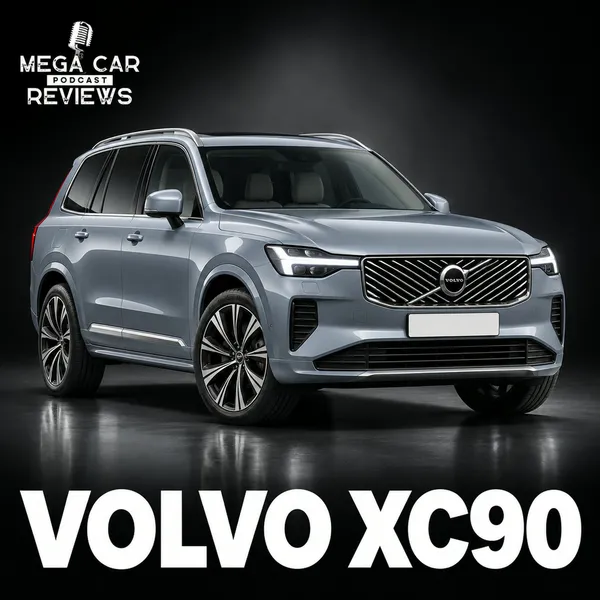
What's the Discovery's edge? While the X5 excels on the open road, it just can't match the Discovery's off-road capabilities. So it comes down to what you value more, right? On-road performance versus off-road prowess. Exactly. Then there's the Volvo XC90, known for its safety, reliability, and that sleek Scandinavian design. It's a tough one to beat, the XC90. How does it compare?
- 11:19
The XC90 is great for everyday driving, but it doesn't quite have the same off-road grit as the discovery. So, once again, it's about what you're looking for in an SUV. And what about the Audi Q7? The Q7 is a great choice for those who prioritize on-road comfort and tech. But there's always a but. Off-roading isn't really its forte.
- 11:37
And while it's spacious, the Discovery might offer more versatility. So it seems like the Discovery's off-road heritage really gives it an edge. But beyond that, what's its unique selling point in this crowded market. Versatility. It's just as comfortable navigating a muddy trail as it is pulling up to a fancy restaurant. The best of both worlds. Exactly. You know, it's interesting, for a vehicle known for its ruggedness, the Discovery has always had a certain elegance about it.
- 12:05
It's not afraid to get dirty, but it cleans up well. Absolutely. It's in a league of its own. Which I think is why it has such a loyal following. It's more than just a car. It's a lifestyle. Exactly. So, as we approach the end of our deep dive into the world of the Land Rover discovery, I want to take a moment to appreciate its journey.
- 12:22
It's been quite the evolution. From those early days as a rugged, no-frills off-roader to this sophisticated, technologically advanced vehicle, the discovery has come a long way. And it's still going strong. Which leads to an interesting question. Given its history of innovation, how do you see the discovery adapting to the future of the automotive industry? That's the million-dollar question, isn't it?
- 12:44
With electric vehicles and autonomous driving on the horizon. What does it mean for a vehicle like the Discovery? I think the Discovery is well, positioned to navigate these changes. In what way? They've already embraced electrification with hybrid models. Oh, right, the hybrid discoveries. I'd almost forgotten about those. And these aren't just add-ons, they are designed to enhance the Discovery's existing capabilities.
- 13:07
So they're not just following trends, they're looking ahead. But what about autonomous driving? That seems at odds with the whole adventurous spirit of the Discovery. I don't think we'll see a day when the Discovery is solely reliant on autonomous systems. But I can see those technologies being integrated to enhance the driving experience. Imagine the discovery navigating you through challenging terrain, providing real-time analysis.
- 13:31
So it becomes about augmenting the driver's abilities, not replacing them entirely. Exactly. And then there's connectivity. Imagine controlling various functions from your phone, getting real-time updates, sharing your adventures instantly. It's incredible to think how far we've come and where we're headed. The discovery of the future could be even more capable, more connected, and more sustainable. All while staying true to its roots.
- 13:56
It's an exciting time for the automotive industry, and the Land Rover discovery is definitely one to watch. Absolutely. But for now, we've covered a lot of ground. We've explored its history, its technology, its rivals. And we've barely scratched the surface. Exactly.