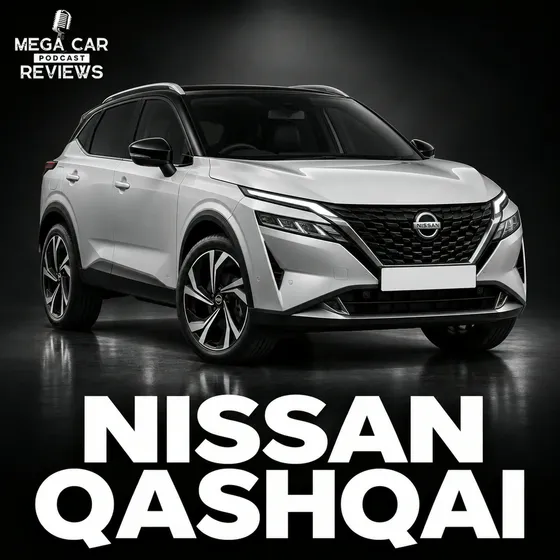
Nissan Qashqai
Is the Nissan Qashqai still the family crossover to beat?
24 November 2026 · 22 min
- SUV
Or listen onApple PodcastsSpotify
Key facts
- Cars for sale
- 11,754
- Average asking price
- £13,945
- Typical price range
- £4,040 to £25,355
- The middle 90% of adverts
- Cheapest advert
- £995
- 2008 1.5 dCi Visia Hatchback 5dr Diesel Manual 2WD · 143,000 miles
- Most expensive advert
- £42,990
- 2026 Tekna+ E-power Auto · 5,004 miles
- Typical mileage
- 36,422 miles
- Days advertised
- 54
- Typical time on sale
- Insurance groups
- 5 to 31
- Fuel
- Gearbox
Source: MarketCheck UK. Figures for used cars advertised in the UK on 24 November 2026.
Used prices by year
| Year | Cars for sale | Typical price | Price range | Typical mileage |
|---|---|---|---|---|
| 2026 | 958 | £24,396 | £20,197 to £31,910 | 149 miles |
| 2025 | 908 | £21,998 | £17,996 to £27,961 | 10,198 miles |
| 2024 | 1,254 | £17,600 | £13,670 to £22,930 | 25,784 miles |
| 2023 | 2,168 | £17,134 | £13,118 to £21,556 | 22,572 miles |
| 2022 | 1,085 | £14,990 | £11,026 to £19,389 | 29,697 miles |
| 2021 | 505 | £13,595 | £9,812 to £17,975 | 35,596 miles |
| 2020 | 489 | £10,995 | £7,991 to £14,457 | 48,569 miles |
| 2019 | 902 | £9,600 | £6,990 to £12,995 | 57,000 miles |
| 2018 | 743 | £8,280 | £5,990 to £11,290 | 67,930 miles |
| 2017 | 767 | £7,500 | £4,996 to £10,499 | 70,000 miles |
| 2016 | 591 | £6,495 | £4,046 to £9,990 | 75,000 miles |
| 2015 | 515 | £5,495 | £3,495 to £8,995 | 80,000 miles |
| 2014 | 357 | £4,895 | £2,995 to £7,535 | 86,000 miles |
| 2013 | 162 | £3,789 | £1,995 to £6,909 | 87,495 miles |
| 2012 | 129 | £3,399 | £1,833 to £5,997 | 92,000 miles |
| 2011 | 97 | £2,795 | £1,575 to £4,996 | 101,390 miles |
| 2010 | 74 | £2,492 | £1,499 to £4,428 | 109,011 miles |
| 2009 | 27 | £2,250 | £1,379 to £3,546 | 92,678 miles |
| 2008 | 18 | £1,897 | £995 to £4,146 | 115,881 miles |
| 2007 | 5 | £1,990 | £1,398 to £2,854 | 115,000 miles |
About this episode
In this episode of The Mega Car Review Podcast, Marv and Claudia turn their attention to the car that made the family crossover normal in Britain: the Nissan Qashqai. Designed in London, engineered in Bedfordshire and built in Sunderland, it has spent nearly two decades near the top of the UK sales charts. That makes it one of the most common used cars you can buy, and one of the easiest to get wrong.
Join our hosts as they go back to 2007, when Nissan gambled on replacing its ordinary family hatchbacks with something taller and tougher looking, and follow the Qashqai through all three generations. They explain what changed each time, from the seven seat Qashqai+2 to the technology of the second generation and the e-Power system in the latest car, where a petrol engine works only as a generator for an electric motor.
They also get into the detail that matters when you are spending your own money. Which engine should you be careful with, and why does late 2018 mark such an important dividing line? What goes wrong with the suspension on early cars, and what should diesel buyers ask about before they hand over a deposit?
Then there is the price. Using used car data from MarketCheck UK, Marv and Claudia look at a market of nearly 12,000 Qashqais for sale, from a 2008 diesel at £995 to a 2026 e-Power at £42,990. They cover what you get for your budget, why insurance groups run all the way from 5 to 31, and what road tax and servicing are likely to cost.
Finally, they put the Qashqai up against its closest rivals. Does the Kia Sportage's seven year warranty settle the argument? Is the Ford Kuga the better choice for keen drivers? And is the Volkswagen Tiguan worth paying more for?
If you are shopping for a used family car, or you simply want to know why there is a Qashqai on every street, this episode is for you.
Tune in now for a complete used buyer's guide to the Nissan Qashqai, and find out which one deserves a place on your shortlist.
Don't forget to subscribe to The Mega Car Review Podcast and leave us a review. Got a car you'd like us to cover next? Let us know!
In this episode
- How the Qashqai created the family crossover, and the three generations explained
- The engines to choose, the one to be careful with, and the faults to check for
- Used prices from MarketCheck UK, plus insurance groups, road tax and servicing costs
- How it compares with the Kia Sportage, Ford Kuga and Volkswagen Tiguan
The written review
Introduction
The Nissan Qashqai is the car that made the family crossover normal in Britain. Before it arrived, a family wanting something practical bought a hatchback such as a Ford Focus or a Volkswagen Golf, and a 4x4 was a big, thirsty thing for farmers and towing. The Qashqai sat between the two: the high seating position and chunky looks of an SUV, with the size, running costs and easy driving manners of a family hatchback. Almost every rival on sale today follows the recipe it set.
It is also a British story. The Qashqai was designed at Nissan's studio in London, engineered at Cranfield in Bedfordshire and has been built in Sunderland from the start. Millions have come out of that factory, and it has spent most of its life near the top of the UK sales charts. That popularity is what makes it interesting as a used car: there are thousands to choose from, at every price from under £1,000 to over £40,000.
History
Nissan launched the Qashqai in 2007 as a gamble. Its ordinary family cars, the Almera and the Primera, were selling poorly, so it replaced them with something different. The name comes from the Qashqai people of Iran, and plenty of people could not pronounce it at first. It did not matter. Buyers loved the idea and the car sold far beyond Nissan's own forecasts.
The first generation ran from 2007 to 2013. In 2008 Nissan added the Qashqai+2, a stretched version with a third row of seats for occasional use, and in 2010 the range was facelifted with a new front end and better cabin materials.
The second generation arrived in 2014. It was longer, lower and far more modern inside, with safety technology that had been reserved for expensive cars a few years earlier. The seven seat version was dropped, as the larger X-Trail took over that job. A facelift followed in 2017, and from late 2018 the engines were replaced with a new 1.3 litre turbo petrol developed with Renault and Mercedes.
The third generation went on sale in 2021 on an all new platform. Diesel was dropped completely. Every engine is now electrified in some way, either a 1.3 litre petrol with mild hybrid assistance or, from 2022, Nissan's e-Power system.
The current car was facelifted in 2024 with a sharper front end and Google based infotainment, and the e-Power system was updated again in 2025 with more power and better economy.
The three generations in detail
First generation, 2007 to 2013. Petrol engines are a 1.6 with around 115 horsepower and a 2.0 with around 140. Diesels are the 1.5 dCi with around 106 to 110 horsepower, a 2.0 dCi with 150, and from 2011 a more efficient 1.6 dCi with 130. Four wheel drive was available on the bigger engines. Trim levels run Visia, Acenta, N-Tec and Tekna. The N-Tec is the one to look for: it brought a panoramic glass roof, sat nav and a reversing camera at a sensible price. The Qashqai+2 is the only seven seat Qashqai there has ever been.
Second generation, 2014 to 2021. Early cars have a 1.2 litre turbo petrol with 115 horsepower or a 1.6 turbo petrol with 163, and 1.5 or 1.6 litre diesels with 110 and 130 horsepower. From late 2018 the petrols were replaced by the 1.3 litre turbo with 140 or 160 horsepower, and the automatic changed from a CVT to a seven speed dual clutch gearbox. This is an important dividing line for used buyers, as the 1.3 is a much better engine than the 1.2. Trims are Visia, Acenta, Acenta Premium, N-Connecta, Tekna and Tekna+. This generation introduced the 360 degree parking camera, automatic emergency braking and, from 2018, ProPilot, which steers, accelerates and brakes in a single motorway lane.
Third generation, 2021 onwards. The 1.3 petrol gained a mild hybrid system, with 140 or 158 horsepower, a manual or an automatic gearbox, and four wheel drive as an option on the more powerful version. The e-Power, added in 2022, is unusual. A 1.5 litre petrol engine never drives the wheels. It works purely as a generator, feeding an electric motor that does all the driving. The result feels like an electric car, smooth and quiet with instant response, but you fill it with petrol and never plug it in. Inside there is a 12.3 inch touchscreen, a digital instrument display and a head up display on higher trims. Rear doors that open to almost 90 degrees make fitting a child seat much easier.
Who is it for?
The Qashqai suits a family of four who want one car that does everything without fuss. The boot takes a pushchair and the weekly shop, the high seating position makes it easy to load children in and out, and it is no harder to park than a hatchback. It is also a favourite with older drivers, because you slide across into the seat and do not drop down into it.
It is a sensible choice for a new driver's first family car or for anyone who simply wants transport they do not have to think about. Parts are cheap, every garage knows them and there is always another one for sale down the road.
It is less suited to keen drivers, who will find it competent but not exciting, and to anyone who regularly carries seven people or tows a heavy caravan. Drivers who cover high motorway mileage should look at a diesel second generation car or the e-Power.
Used prices
The pricing figures here come from Marketcheck UK, which tracks used cars advertised for sale across the country. Right now there are 11,754 Nissan Qashqais for sale in the UK, at an average asking price of about £13,900. That is a huge choice, and it means buyers can afford to be picky.
The range is enormous. The cheapest car advertised is a 2008 1.5 dCi Visia diesel manual at £995, with 143,000 miles on the clock. The most expensive is a 2026 Tekna+ e-Power automatic at £42,990, with 5,000 miles.
Age is the main thing that sets the price. A typical 2025 car is around £22,000. A 2021 car is about £13,600. Go back to 2016 and the typical price is £6,500, a 2011 car is around £2,800, and the very oldest 2007 cars are about £2,000. Put simply, a Qashqai loses roughly 40 percent of its value in its first four years, and then the fall slows down.
For most buyers the sweet spot is a 2019 to 2021 second generation car with the 1.3 petrol engine, at around £9,500 to £13,500. It has the better engine, modern safety equipment and plenty of life left. Buyers on a tight budget will find good first generation cars for £3,000 to £5,000, but condition matters far more than age at that level.
Insurance groups
Qashqais currently for sale span insurance groups 5 to 31 out of 50, which shows how much the range has changed over the years.
The cheapest to insure are the low powered first generation cars and the small engined second generation cars. A 1.6 petrol or 1.5 diesel first generation car, or a 1.2 petrol or 1.5 diesel second generation car, generally sits in the low to mid teens. The 1.3 petrol with 140 horsepower is in a similar place, and the 160 horsepower version is a few groups higher.
The more powerful models cost more. The old 2.0 diesel and the 163 horsepower 1.6 petrol sit around group 20. Third generation cars are higher across the board because they are worth more and are packed with expensive sensors and cameras, and the e-Power models sit at the top, in the mid twenties to around group 30. Higher trims such as Tekna and Tekna+ usually add a group or two over a basic car with the same engine. Always check the exact group for the car you are looking at, as it can change with trim and wheel size.
Fuel economy, servicing and road tax
Fuel economy. The diesels are the most economical for long journeys. The 1.5 dCi regularly returns 50 to 60 miles per gallon in real driving. The 1.2 petrol manages around 40, and the 1.3 petrol is similar, at about 38 to 44 depending on how it is driven. The third generation mild hybrid gives low to mid forties. The e-Power is officially good for over 50 miles per gallon and does its best work in town, where it behaves most like an electric car. On a fast motorway run it falls back into the forties.
Servicing. The Qashqai is cheap to maintain. Services are due every year, with a mileage limit of around 12,500 miles for petrols and up to 18,000 for diesels. A routine service at an independent garage is typically £150 to £300. Diesels need more care: the particulate filter needs regular long runs to stay clear. Cars with the older CVT automatic should have had the gearbox fluid changed.
Road tax. This depends on when the car was registered. Cars registered before April 2017 are taxed on their CO2 emissions, and this is where the second generation 1.5 diesel shines, at just £20 a year. Older 2.0 petrol and four wheel drive cars can cost several hundred pounds a year, so check before buying. Cars registered from April 2017 pay the standard flat rate, currently around £195 a year, whatever the engine. Any car with a list price over £40,000 when new also pays the expensive car supplement for five years, which can catch the very top e-Power models.
What to check when buying
First generation, 2007 to 2013. Listen for knocks from the suspension over bumps: front top mounts and rear shock absorbers are well known weak points. On diesels, check for warning lights and ask how the car was used, as short trips clog the particulate filter. Check the clutch on higher mileage cars, test the air conditioning, and make sure the panoramic roof blind works. Look for rust on the rear subframe on the oldest cars.
Second generation, 2014 to 2021. The engine to be careful with is the early 1.2 turbo petrol, sold from 2014 to 2018. Some suffered from high oil consumption and timing chain wear. Check the oil level, listen for a rattle on a cold start and insist on a full service history. On CVT automatics, drive at low speed and feel for juddering or hesitation. Stop start systems that have stopped working usually point to a tired battery. Test every function of the touchscreen, the Bluetooth and the parking cameras, as electrical glitches are the most common complaint.
Third generation, 2021 onwards. These are still young and serious problems are rare. Check that recall work and software updates have been done by a Nissan dealer, and test the driver assistance systems on the road. Some owners have reported weak 12 volt batteries and infotainment glitches on early cars. On every Qashqai, look for kerbed wheels and scuffed bumpers, which tell you how carefully it has been driven.
How it compares with its rivals
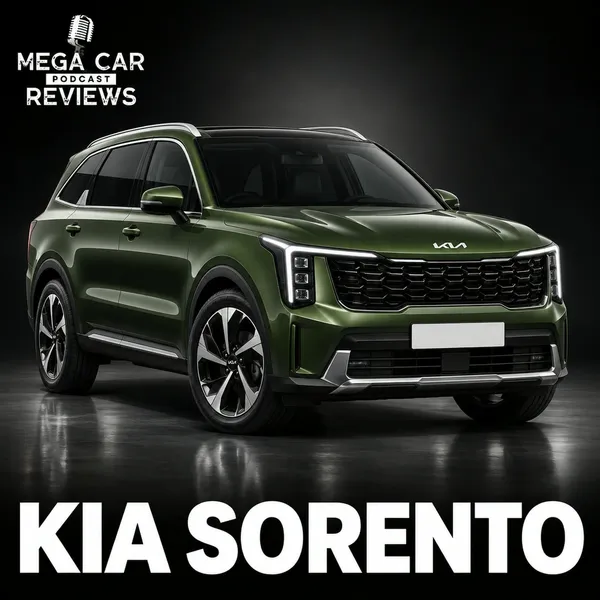
Kia Sportage. The Sportage is the Qashqai's biggest rival and often its closest competitor in the sales charts. Its headline advantage is Kia's seven year, 100,000 mile warranty, which passes to later owners. A four year old Sportage still has three years of manufacturer cover, where a Qashqai of the same age has none.
The Sportage is a slightly larger car, with more rear legroom and a bigger boot, and the latest generation has one of the best interiors in the class. It also offers a wider choice of engines, including full hybrid and plug in hybrid versions.
The Qashqai fights back on price and choice. There are more of them for sale, they are generally cheaper at the same age, and they feel a little smaller and easier to place on narrow roads. If warranty peace of mind matters most, choose the Kia. If value matters most, choose the Nissan.
Ford Kuga. The Kuga is the driver's choice in this class. It steers more sharply and feels more settled on a twisting road than the Qashqai, which is tuned for comfort.
It is also bigger, with a sliding rear bench on the latest generation that lets you trade legroom for boot space. The plug in hybrid Kuga has been a strong seller and offers around 35 miles of electric driving, something the Qashqai cannot match, as the e-Power cannot be plugged in.
The Qashqai generally has the better cabin quality on older cars and tends to be cheaper to insure. Kuga buyers should check that recall work has been carried out, especially on plug in hybrid models. For someone who enjoys driving, the Kuga is the better car. For someone who wants comfort and low costs, the Qashqai is.
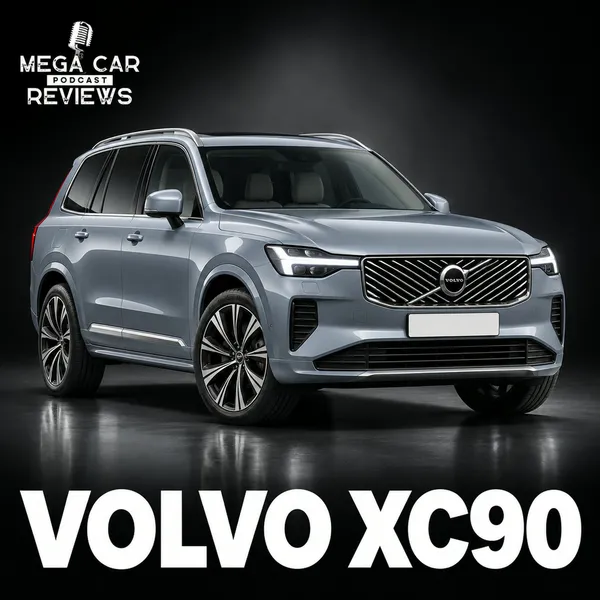
Volkswagen Tiguan. The Tiguan is the premium choice of the three. It feels more solid inside, it is quieter at speed and it holds its value better.
That quality costs money. A Tiguan is usually several thousand pounds more than a Qashqai of the same age and mileage, and servicing and parts cost more too. It is also a larger car, and the Tiguan Allspace offers seven seats.
The Qashqai counters with more equipment for the money. A mid range N-Connecta typically has the cameras, the sat nav and the safety kit that Volkswagen often charged extra for. Buyers who want a more upmarket feel and are happy to pay for it will prefer the Tiguan. Buyers who want the most car for their budget will find the Qashqai hard to beat.
Verdict
The Qashqai is not the most exciting car in its class, the biggest, or the one with the longest warranty. It is the all rounder: easy to live with, cheap to run and available everywhere. Avoid the early 1.2 petrol unless its history is perfect, favour the 1.3 petrol or a well maintained diesel, and with nearly 12,000 for sale you can afford to walk away from any car that does not feel right.
Transcript
Machine-generated transcript. It may contain errors.
- 0:37
Imagine deciding to design a vehicle that, you know, possesses the aerodynamic profile of a farmer's tractor, right? Yeah, not exactly sleek. No, not at all. But then attempting to make it drive like a nimble VW golf. And on top of that, naming it a word half the country couldn't even pronounce. Right. The Qashqai. Really was. In 2007, Nissan did exactly that.
- 0:59
I mean, they took this massive gamble on a struggling market segment, and in doing so, they basically completely rewired the DNA of British roads. They absolutely did. And it means that if you're a buyer today, you start out looking for a reliable used vehicle, and suddenly you're, well, you're trying to decipher a decade and a half of rapid automotive evolution.
- 1:17
Right. And, you know, the automotive landscape before 2007, it was incredibly binary. Buyers were essentially forced into a compromise. Oh, totally. You either bought a conventional, low-slung hatchback for fuel efficiency and handling, or you bought a massive ladder chassis 4x4 just to get that commanding view of the road. Which were mostly meant for farmers. Exactly. But Nissan, they identified this massive psychological gap.
- 1:44
People crave the robust, chunky aesthetic, you know, and the perceived safety of sitting higher up. Right. But they deeply resented the massive fuel bills and the cumbersome agricultural driving dynamics of a traditional SUV. Spot on. It was a completely new recipe. It offered the high seating of an SUV with the running costs of a hatchback. Plus, it's this uniquely British success story, designed in London, engineered in Bedfordshire, and built in Sunderland.
- 2:17
Okay, let's unpack this. Because our mission for today's deep dive is to synthesize a comprehensive buyer's review of the Nissan Quashqai. We are going to extract the absolute vital nuggets of knowledge from this data so you, the listener, can navigate the used market confidently, spot the hidden mechanical gems and just avoid the catastrophic money pits. Because there are a few of those.
- 2:40
Oh, definitely. We aren't just looking at what this car is, we are dissecting how its engineering evolved over three different generations. And that's crucial. The Qashqai is a unique case study because it established a blueprint that, well, every rival manufacturer subsequently rushed to copy. Right, it invented the segment. It did. And its constant presence at the top of the UK sales charts means the used market is absolutely saturated.
- 3:08
But that saturation creates a bit of a mechanical minefield. Trevor Burrus, I mean, the engineering differences between a 2008 model and a 2024 model are just staggering. Completely different vehicles, really. So rather than just reading a list of generations, let's look at how Nissan constantly scrambled to fix their mistakes. When they launched that first iteration, you know, running from 2007 up to 2013, they were essentially putting a prototype onto the road.
- 3:35
Right. And the sources highlight a major weak point in the suspension there. Yeah, specifically the front top mounts and the rear shock absorbers. Right. And the mechanical failure there comes down to basic physics, honestly. Nissan was trying to make a tall, relatively heavy body handle like a lightweight hatchback. Which is no easy feat. Not at all. To prevent the car from rolling over in corners, they had to severely stiffen the suspension components.
- 4:02
Right. So when you combine stiff shock absorbers with a higher center of gravity, plus the relentless impacts of deteriorating British roads, those top mounts just bear a massive amount of kinetic energy. So they just wear out fast. Exactly. Over time, the rubber degrades, the bearings wear out, and you get this distinct hollow knocking sound when driving over speed bumps.
- 4:23
Oh, wow. Good to know. And on the older models, buyers also need to inspect the rear subframe, right? Yes, absolutely. It's highly susceptible to structural rust due to, well, just inadequate factory under sealing. Classic. Now, there is also a fascinating quirk from that early era: the Qashqai Plus 2. Oh, yeah. The seven-seater. Right. In 2008, Nissan physically stretched the wheelbase to squeeze in a third row of seats.
- 4:49
And it remains the only seven-seater Qashqai ever produced. It's super rare now. If you want a newer seven-seater Nissan today, you are forced to upgrade to the much larger X-Trail. Exactly. And if you are hunting for one of these older Gen 1 models, the data points to the N-Tech trim as the absolute sweet spot. Oh, for sure.
- 5:10
Yeah. Giving you a panoramic glass roof, integrated sat-nav, and a reversing camera. Which was huge back then.
- 5:18
But as the market became more competitive, Nissan had to push the technological boundaries even further. Right, moving into Gen 2. Yeah. The second iteration running from 2014 to 2021. This is where we see technology that was previously reserved for luxury German saloons trickling down to the family crossover. Like what? Well, they introduced 360-degree cameras, automatic emergency braking, and eventually ProPilot.
- 5:45
Right, ProPilot. Which is pitched as a system that handles single-lane motorway driving. But mechanically, how is it actually achieving that in a standard mid-range family car? It's pretty clever. It relies on sensor fusion. There's a millimeter wave radar unit hidden right behind the Nissan badge on the grill. Okay. And that's constantly calculating the distance and relative speed of the car head.
- 6:07
Simultaneously, there's a high-resolution camera mounted at the top of the windshield, reading the painted lane markings. So they talk to each other. Exactly. The computer continuously cross-references those two data streams and sends micro adjustments to the electronic power steering rack to keep the car perfectly centered. While also doing the pedals. Yep, modulating the throttle and brakes to maintain a safe gap.
- 6:28
See, that level of hardware integration kind of explains the massive mechanical dividing line the sources highlight in late 2018. Oh, the software update analogy. Yeah, exactly. Before late 2018, the core engine was a 1.2-liter turbo petrol, and the review is just ruthless about this early engine, warning buyers to avoid it entirely unless the service history is flawless.
- 6:50
Flawless. Yeah, it suffered from high oil consumption and severe timing chain wear. Right. And the timing chain issue, that's a direct result of how the engine manages oil pressure, isn't it? Yes. The chain tensioner relies on hydraulic pressure from the engine oil. Okay. So if the oil level drops, which it frequently did because the piston ring designs just allowed oil to slip into the combustion chamber and burn away, the tensioner loses pressure.
- 7:14
Oh, no. Yeah. The timing chain then develops slack, literally slapping against its guides. If a buyer hears a metallic rattle on a cold start, that chain is stretching and is dangerously close to skipping a tooth. Which destroys the engine entirely. Totally destroys it. Okay, so to fix this in late 2018, Nissan basically co-developed a brand new 1.3-liter turbo with Renault and Mercedes.
- 7:38
Right, a much better unit. But they didn't just swap the engine, they completely overhauled the automatic transmission, too. They dumped the CVT, the continuously variable transmission, and replaced it with a seven-speed dual-clutch gearbox. Which was a massive upgrade. I mean, I understand that a C V T uses a steel belt running between two variable-width cones to change ratios, which can cause this awful judding if the fluid degrades.
- 8:04
But how does a dual-clutch actually solve that sluggishness? Well, a dual-clutch transmission is essentially two separate manual gearboxes housed inside a single casing but operated electronically. Okay, two gearboxes. Right. One clutch handles the odd gears and the other handles the even gears. So, when you're accelerating in third gear, the computer has already pre-selected fourth gear on the second clutch.
- 8:28
Oh, so it's ready to go. Exactly. When it's time to shift, one clutch simply disengages while the other instantly engages. It totally eliminates that rubber band feeling of a C V T. Giving you that crisp, instantaneous power transfer. Yes, and without the heat and friction issues that plagued the older belt-driven systems. So that 1.3 engine and the dual-clutch gearbox fundamentally transform the car's reliability, which sets the stage for the third generation from 2021 onwards.
- 8:56
Right, the current era. Yeah. Nissan drops diesel entirely and pivots to an electrified lineup. They redesigned the chassis, incorporating rear doors that open a full 90 degrees, which is perfect for child seats, by the way. Oh, parents love that feature. For sure. And the engines are split between mild hybrids and the newly introduced e-power system. Right. Just to be clear, a mild hybrid just uses a beefed-up starter motor and a small battery to take the strain off the alternator.
- 9:23
It can't drive the car on electricity alone. But e-power is an entirely different beast. What's fascinating here is how the e-power system fundamentally subverts our baseline expectation of a hybrid drivetrain. How so? Well, in a traditional hybrid, the internal combustion engine and the electric motor are both mechanically linked to the wheels. They take turns or they work in tandem.
- 9:46
Right, like a Prius. Exactly. But in Nissan's e-power architecture, the 1.5-liter petrol engine never drives the wheels. It has absolutely no mechanical connection to the axles. Okay, I am going to push back on this concept because I'm looking at the engineering specs and I see a car that mimics an EFE. You get smooth torque, silent operation, but I still have to stand at a petrol pump to fill it up.
- 10:11
Yep, you do. And it only averages around 50 miles to the gallon in the city, dropping into the 40s on the highway. So, mechanically speaking, aren't I just taking on the complexity of an electric drivetrain while still burning fossil fuels at a relatively average rate? Like, aren't I getting the worst of both worlds? It is the central debate surrounding this specific powertrain.
- 10:31
But think of e-power like a laptop plugged into a wall outlet while you're using it. Okay. The laptop runs exclusively off its internal battery, right? The walled outlet, which in this case is the petrol engine, is simply generating a constant flow of energy to keep that battery topped up. I see. So the petrol engine runs at an optimal steady RPM just to generate electricity.
- 10:52
It sends that to an inverter that either feeds the battery or sends it directly to the electric motor on the front axle. So it's an electric vehicle that carries its own onboard power station? Precisely that. You get the frictionless, instantaneous response of an electric vehicle without a massive, heavy lithium-ion battery pack. And without range anxiety. Right, and without ever needing to rely on public charging infrastructure.
- 11:16
For buyers living in environments where installing a home charger is physically impossible, it delivers the refinement of an EV while operating entirely within the legacy fueling infrastructure. Here's where it gets really interesting because all of this underlying technology fundamentally shapes the economic reality of buying a used Qashqai. It really does. Let's look at the wallet side of things.
- 11:38
Exactly. Moving from the mechanics ramp to the accountants' desks. We have to look at how this machinery translates to the price tag. MarketCheck UK data shows 11,754 Qashqais currently for sale. That is a massive amount of cars. It's huge. The floor of the market is a 2008 diesel with 143,000 miles for just 995 pounds. While the ceiling is a 2026 e-power Tekna Plus with 5,000 miles sitting at $42,990.
- 12:10
Bridging that massive spectrum is a very steep depreciation curve. The data shows the cash cut loses roughly 40% of its value within the first four years. Wow, 40%. Yeah. And this is driven purely by market saturation. Because there are thousands of X-Lease and X-Fleet models flooding the market simultaneously, supply heavily outstrips demand. Which pushes residual values down.
- 12:34
Exactly. For a used buyer, targeting a four-year-old model means the original owner has already absorbed that primary financial blow. That makes a lot of sense. Now, maintenance costs are generally low, right? Averaging about £150 to £300 for an annual service at an independent garage. Yeah, they're not bad to maintain. However, the sources issue a severe warning regarding the diesels and their diesel particulate filters or DPFs?
- 13:00
Yes, the DPF. So a DPF is a ceramic honeycomb structure nestled inside the exhaust system. It's designed to trap unburnt soot particles before they enter the atmosphere. Which sounds good. It is, until that honeycomb eventually fills up. To clear it, the engine management system triggers a regeneration cycle, it injects extra fuel to raise exhaust temperatures to over 600 degrees Celsius.
- 13:24
Basically incinerating the soot into harmless ash. Right. But that regeneration only happens if the car is driven at sustained motorway speeds for 20 to 30 minutes, right? Correct. And that's the catch. If your driving profile consists entirely of low-speed stop-start urban traffic, the exhaust never reaches the required thermal threshold. Oh, boy. Yeah. The filter clogs, the dashboard lights up, and you are looking at a replacement bill well over a thousand pounds.
- 13:50
Ouch. Yeah. Mechanically, a diesel Qashqai is a terrible choice for city driving, but highly efficient for long motorway commutes. Well, speaking of diesels, that brings us to an incredible road tax hack hidden in the data. This is one of my favorite details. It's so specific. It hinges entirely on the exact month the car was registered. So if you locate a second-generation 1.5-liter diesel Koshkai registered before April 2017, the UK road tax is calculated based on its CO2 emissions.
- 14:22
Which is very low. Right, because that specific engine is highly efficient. The tax is just 20 pounds a year. But if you buy the exact same vehicle with the exact same engine registered in May 2017, one month later. Yep, it falls under the government's flat rate system, costing roughly £195 a year. That's crazy. And older first-generation 2.0 liter models can cost several hundred pounds annually.
- 14:46
Yeah, the costs vary wildly. You also have to factor in the skyrocketing cost of insurance, which actually reveals a lot about the technology we discussed earlier. The sources show insurance groups ranging from group 5 all the way to group 31 out of 50. Yeah, I noticed that. How does a standard family crossover end up in insurance group 31?
- 15:05
I mean, that's a bracket normally reserved for high-performance sports cars. The industry term is tech inflation. Tech inflation. Yeah. The cheap to insure Qashqais, those in the lowest insurance groups are the older, mechanically simple first-generation cars. A low-speed impact in a 2010 model just requires a body shop to replace a piece of molded plastic. Right. Simple fix.
- 15:27
But consider the pro-pilot system we analyzed on the newer generation. A minor frontal impact on a 2024 E-Power model destroys the millimeter wave radar. Oh, wow. And replacing the bumper now requires reinstalling ultrasonic sensors, aligning the 360-degree cameras, and paying specialized technicians for hours of dynamic software calibration. Just to ensure the emergency braking system actually functions correctly.
- 15:52
Exactly. The sheer cost of reinstating that safety hardware has forced insurers to massively hike the premiums on the newer models. Furthermore, any model that retailed over £40,000 brand new incurs the government's expensive car supplement for five years. So, the technology that keeps you safe also deeply punishes your wallet if it gets bumped. It really does. So, if the Qashqai is the baseline for this segment, what happens when we look at the rivals trying to steal its crown?
- 16:18
The sources isolate three main competitors here: the Kia Sportage, the Ford Kuga, and the VW Tiguan. Analyzing the rivals is honestly the best way to determine if the Qashqai actually suits your specific needs. The Kia Sportage is fundamentally its biggest threat. Why is that? Well, it offers slightly more cargo capacity and a more modern interior aesthetic in recent years.
- 16:42
But the primary mechanical advantage is Kia's seven-year 100,000-mile warranty? Trevor Burrus, fully transfers to used owners. Yes, exactly. I mean, a transferable warranty of that length acts as an actuarial safety net for the used buyer. I mean, you could buy a four-year-old Sportage and still have three years of manufacturer backing. Whereas a Nissan of the same age has zero.
- 17:04
Right. So if I'm synthesizing this like a personality test, the sportage is the anxiety blanket for the highly risk-averse buyer. That's a great way to put it. Then there is the Ford Kuga. The sources categorize this as the driver's choice, noting it has superior chassis tuning for twisty roads. Yeah, Ford utilizes stiffer suspension geometry and a more responsive steering rack.
- 17:27
They basically sacrifice some of the Qashqai's ride comfort for dynamic agility. Makes sense. The Kuga also features a sliding rear bench, which is great to manipulate leg room versus boot space.
- 17:38
But the standout engineering feature is its plug-in hybrid or PHEV powertrain. Which is different from Nissan's e-Power. Very. Unlike e-Power, the Kuga PHEV utilizes a much larger battery pack that you physically plug into the grid. It offers roughly 35 miles of pure electric driving before the petrol engine engages. So, the CUGA is the optimization tool. It's for the buyer who actually enjoys steering input and possesses the discipline to plug the car in every single evening to zero out their commute emissions.
- 18:10
Exactly. Finally, the Volkswagen Tiguan. The data points to a higher degree of acoustic damping, denser interior materials, and stronger residual value retention. Right, but the entry price is notably higher. It's several thousand pounds more for the same age and mileage. It's the prestige play. If we connect this to the bigger picture, the CashCai doesn't really attempt to beat those rivals in their specific niches.
- 18:33
It's the dependable multi-tool. Exactly. It relies on volume and comprehensive packaging. A mid-range QashCai and Connecta provides the camera systems, the navigation, and the active safety hardware as standard equipment. Items that often require expensive option packs on the VW Tiguan. Oh, absolutely. And because there are nearly 12,000 of them actively sitting on four courts, the buyer holds immense leverage.
- 18:58
I mean, if a seller refuses to negotiate on price or if the dual-clutch transmission hesitates on a test drive, you aren't forced to compromise. You simply walk away. Yep. Knowing an identical spec is available five miles down the road. The sheer density of the supply chain completely removes desperation from the purchasing equation. So, what does this all mean?
- 19:17
Let's distill the final verdict from the sources. We have established who the Kashikai is not for. It is not engineered for the driving enthusiast. It lacks the towing capacity for heavy caravans. And unless you are buying a first-generation plus two, it cannot accommodate a family of seven anymore. However, for a family of four requiring practical cargo space or an older driver prioritizing ease of ingress, you know, sliding across into a seat rather than dropping down into one, it remains a highly pragmatic choice.
- 19:48
Fust-free transport. Exactly. Supported by an omnipresent network of mechanics who know the platform inside and out. And the data reveals a definitive sweet spot, reiterating the golden recommendation from the sources, the Ultimate Buy is a second-generation model produced between 2019 and 2021, equipped with the 1.3-liter turbo petrol engine. The 1.3 is key. Yeah. This era avoids the catastrophic timing chain issues of the earlier 1.2 engine.
- 20:15
It benefits from the superior dual-clutch transmission and currently sits in the deepest trough of the depreciation curve. Which is perfect for a used buyer. Right. You are looking at an outlay of roughly $9,500 to $13,500 for a technologically modern, mechanically sound vehicle. And you know, this raises an important question for you to mull over. Oh. While the 1.3 liter is the current value pick, the engineering behind those newer e-power models we discussed forces us to evaluate the trajectory of the entire industry.
- 20:46
How so? Currently, the global automotive debate is intensely focused on scaling up massive lithium-ion batteries and upgrading national power grids to support them. Sure, massive batteries and charging grids everywhere. Right. But analyzing the Qashqai e-power suggests an alternative evolutionary branch? Could the most practical future of electric vehicles involve completely untethering from the plug? Oh, wow. By carrying a hyper-efficient, miniaturized internal power plant dedicated solely to electrical generation, we achieve the kinetic perfection of an EV without the associated infrastructural anxiety.
- 21:22
So the future of EVs might not be plugging into the wall. Exactly. It is a fundamental paradigm shift, masquerading is a conventional family crossover. A paradigm shift designed for the school run. That is a brilliant concept to mull over. Well, thank you for joining us on this deep dive. Hopefully, you now possess the technical clarity to step onto that forecourt, identify the mechanical red flags, negotiate with authority, and pinpoint exactly where the true value lies.
- 21:50
Until next time.